|
Nguyễn Quốc Trụ
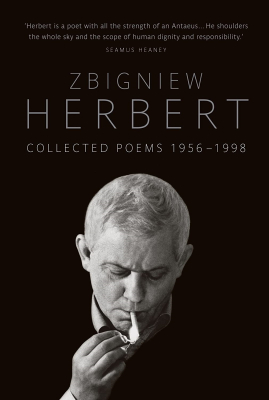
Zbigniew Herbert
I CHOSE THIS POEM after some hesitation. I do not consideration the best poem I’ve written, nor is it one that can represent my poetic program. I think it does have two virtues: it is simple, dry, and speaks of matters that are truly close to my heart, without superfluous ornament or stylization. The poem has a three-part structure. In the first part, it speaks of an event taken from the work of a classical author. It is, as it were, a note on my reading. In the second part I transfer the event to contemporary times to elicit a tension, a clash, to reveal an essential difference in attitude an behavior. Finally, the third part contains a conclusion or moral, and also transposes the problem from the sphere of history to the sphere of art. You don’t have to be a great expert on contemporary literature to notice its characteristic feature-the eruption of despair and unbelief. All the fundamental values of European culture have been drawn into question. Thousands of novels, plays, and epic poems speak of an inevitable annihilation, of life’s meaninglessness, the absurdity of human existence. I don’t mean to subject pessimism to easy ridicule if it is a response to evil in the world. However, I think that the black tone of contemporary literature has its source in the attitude its writers take to reality. And that is what I tried to attack in my poem. The Romantic view of the poet who bares his wounds, relates his misfortunes, still has many supporters today, despite changes in style and literary taste. It is universally held that the artist has a sacred right to ostentatious subjectivism, to a display of the tender “I.” If a school of literature existed, one of its basic exercises should be description not of dreams but of objects. Beyond the artist’s reach, a world unfolds- difficult, dark, but real. One should not lose the faith that it can be captured in words, that justice can be rendered it. Very early on, near the beginning of my writing life, I came to believe I hat I had to seize on some object outside of literature. Writing as a stylistic exercise seemed barren to me. Poetry as the art of the word made me yawn. I also understood that I couldn’t sustain myself very long on the poems of others. I had to go out from myself and literature, look around in the world and lay hold of other spheres of reality. Philosophy gave me the courage to ask primary questions, fundamental, basic questions: does the world exist, what is its essence, and can it be known? If this discipline can be made useful to poetry it is not by translating systems but by recreating the drama of thought. I do not turn to history to draw from it an easy lesson of hope, but to confront my experience with that of others, to acquire something I might call universal compassion, and also a sense of responsibility, responsibility for the state of my conscience.
It is an old dream of poets that their work may
become a concrete object like a stone or a tree, that what they make
from the material of language- itself subject to constant change-may
acquire a lasting existence. One of the ways to achieve this, it seems
to me, is to cast it far away from oneself, to erase the ties that
connect it to its creator. This is how I understand Flaubert’s
recommendation: “The artist must be in his work as God is in nature.”
Tôi chọn bài thơ này sau tí ngần ngừ. Tôi không coi
dây là bài thơ bảnh nhất của tôi, cũng không coi nó đại diện cho chương
trình thơ tôi. Tôi nghĩ, nó có hai đức hạnh: giản dị, khô ráo, và “nói
lên” vấn đề rất cận kề trái tim tôi, đếch cần hoa lá cành, hay văn vẻ. Bạn không cần phải là một chuyên gia lớn về văn học đương thời khi ngửi ra cái mùi đặc dị của nó – chán chường, mất niềm tin. Tất cả những giá trị nền tảng của văn hóa Tây Phương bị tra hỏi. Ngàn ngàn tiểu thuyết, kịch, thơ sử thi nói về một sự huỷ diệt, hư vô hoá không làm sao tránh khỏi, sự vô nghĩa của đời sống, sự phi lý của kiếp người. Tôi không định lôi cái bi quan ra ở đây, để dễ dàng chỉ trích, rằng, đây là 1 sự đáp ứng trước… cái ác của thế giới. Tuy nhiên, tôi nghĩ cái giọng đen thui của văn học đương thời có cái nguồn của nó, ở trong thái độ của những nhà văn khi đụng thực tại. Và đó là cái mà tôi tính tấn công, trong bài thơ. Cái trò cào cấu vết thương, than thân trách phận, của đám nhà văn nhà thơ Lãng Mạn, đến nay vưỡn còn nhiều “fan”, mặc dù thay đổi văn phong và khẩu vị. Đó là 1 giấc mơ cổ xưa về thi sĩ, rằng, thơ của họ có thể trở thành cục đá, cái cây; rằng, cái mà họ làm ra, từ chất liệu ngôn ngữ – chính nó thì cũng một đổi thay hằng hằng – có thể có được, 1 hiện hữu hằng hằng. Để làm được cú này, một trong những toan tính, là, ném nó ra xa, rũ mọi rây rưa, móc nối nó với kẻ làm ra nó. Tôi ngộ ra được điều Flaubert đòi hỏi: Nghệ sĩ, trong tác phẩm của hắn ta, phải như là Thượng Đế, trong thiên nhiên
Nguyễn Quốc Trụ dịch
_____
Tại sao kinh điển ? 1
Trong cuốn bốn của loạt sách chiến sử Peloponnesian
War
(Nguồn : Tin Văn New Tin Văn
|